Chemistry Journal of Moldova
- Journal Citation Reports for year 2025:
- Impact Factor (IF) 0.5;
- 5-year Journal IF 0.6;
- SCOPUS Journal Metrics for year 2025:
- CiteScore 0.9;
- Source Normalized Impact per Paper (SNIP) 0.334;
- SCImago Journal Rank (SJR) 0.152.



TOP DOWNLOADED ARTICLES
1. SONOCHEMICAL SYNTHESIS OF HEMATITE
NANOPARTICLES
Mihail Iacob
(downloads: 1354)
2. THE ROLE OF HALOGEN BONDING IN THE
SYNTHESIS AND DESIGN OF TAP COMPLEXES
Namiq Shikhaliyev, Ayten Niyazova, Abel Maharramov, Agaisa Askerov, Nazrin Zeynalli, Viktor Khrustalev, Peri Huseynova
(downloads: 950)
3. SILVER AND ZINC NANOPARTICLES
BIOSYNTHESIS USING LAUREL EXTRACT AND
INVESTIGATION OF THE PHOTOCATALYTIC
PROPERTIES
Recep Taş, Ebru Köroğlu, Ahmet Karakuş, Ali Savaş Bülbül, Nilay Akkuş Taş
(downloads: 915)
4. SYNTHESIS OF DIFFERENT STRUCTURAL TYPES
OF ZEOLITES IN THE
HALLOYSITE-DOLOMITE-OBSIDIAN SYSTEM
Gunel Mamedova
(downloads: 873)
5. DERIVATIZATION TECHNIQUES BASED ON
CHARGE TRANSFER REACTIONS FOR
SPECTROPHOTOMETRIC DETERMINATION OF
JOSAMYCIN IN VARIOUS DOSAGE FORMS
Abdelghani Mahmoudi and Ann Van Schepdael
(downloads: 833)
6. A NOVEL GREEN SYNTHESIS OF NICKEL OXIDE
NANOPARTICLES USING ARABIC GUM
Saeid Taghavi Fardood, Ali Ramazani, Sajjad Moradi
(downloads: 811)
7. SYNTHESIS, CHARACTERIZATION AND
MOLECULAR DOCKING OF CHLORO-SUBSTITUTED
HYDROXYXANTHONE DERIVATIVES
Emmy Yuanita, Harno Dwi Pranowo, Mustofa Mustofa, Respati Tri Swasono, Jufrizal Syahri, Jumina Jumina
(downloads: 670)
8. ORGANOCHLORINE PESTICIDES RESIDUES IN
SOIL OF SOROCA DISTRICT, REPUBLIC OF
MOLDOVA
Elena Culighin
(downloads: 509)
9. ROLE OF CYCLODEXTRINS IN NEW
ANTIMYCOBACTERIAL FORMULATIONS
Veaceslav Boldescu, Fliur Macaev, Gheorghe Duca
(downloads: 505)
10. INVESTIGATION OF VARIOUS INFLUENCING
FACTORS OF HYDROTHERMAL SYNTHESIS OF
ANALCIME ZEOLITE
Gunel Mamedova, Gunel Nasirli
(downloads: 494)
NANOPARTICLES
Mihail Iacob
(downloads: 1354)
2. THE ROLE OF HALOGEN BONDING IN THE
SYNTHESIS AND DESIGN OF TAP COMPLEXES
Namiq Shikhaliyev, Ayten Niyazova, Abel Maharramov, Agaisa Askerov, Nazrin Zeynalli, Viktor Khrustalev, Peri Huseynova
(downloads: 950)
3. SILVER AND ZINC NANOPARTICLES
BIOSYNTHESIS USING LAUREL EXTRACT AND
INVESTIGATION OF THE PHOTOCATALYTIC
PROPERTIES
Recep Taş, Ebru Köroğlu, Ahmet Karakuş, Ali Savaş Bülbül, Nilay Akkuş Taş
(downloads: 915)
4. SYNTHESIS OF DIFFERENT STRUCTURAL TYPES
OF ZEOLITES IN THE
HALLOYSITE-DOLOMITE-OBSIDIAN SYSTEM
Gunel Mamedova
(downloads: 873)
5. DERIVATIZATION TECHNIQUES BASED ON
CHARGE TRANSFER REACTIONS FOR
SPECTROPHOTOMETRIC DETERMINATION OF
JOSAMYCIN IN VARIOUS DOSAGE FORMS
Abdelghani Mahmoudi and Ann Van Schepdael
(downloads: 833)
6. A NOVEL GREEN SYNTHESIS OF NICKEL OXIDE
NANOPARTICLES USING ARABIC GUM
Saeid Taghavi Fardood, Ali Ramazani, Sajjad Moradi
(downloads: 811)
7. SYNTHESIS, CHARACTERIZATION AND
MOLECULAR DOCKING OF CHLORO-SUBSTITUTED
HYDROXYXANTHONE DERIVATIVES
Emmy Yuanita, Harno Dwi Pranowo, Mustofa Mustofa, Respati Tri Swasono, Jufrizal Syahri, Jumina Jumina
(downloads: 670)
8. ORGANOCHLORINE PESTICIDES RESIDUES IN
SOIL OF SOROCA DISTRICT, REPUBLIC OF
MOLDOVA
Elena Culighin
(downloads: 509)
9. ROLE OF CYCLODEXTRINS IN NEW
ANTIMYCOBACTERIAL FORMULATIONS
Veaceslav Boldescu, Fliur Macaev, Gheorghe Duca
(downloads: 505)
10. INVESTIGATION OF VARIOUS INFLUENCING
FACTORS OF HYDROTHERMAL SYNTHESIS OF
ANALCIME ZEOLITE
Gunel Mamedova, Gunel Nasirli
(downloads: 494)



2026 Volume 21, no.1
Author(s):
Field: Natural product chemistry and synthesis
Type: Research paper
Issue: 2026 Volume 21, no.1
Pages: 94-102
Emmanuel Nnamdi Ifedi, Olayombo Margaret Banwo, Olakunle Alex Akinsanoye, Oluwadurotimi Olutosin Akintade
Field: Natural product chemistry and synthesis
Type: Research paper
Issue: 2026 Volume 21, no.1
Pages: 94-102
Full Text (PDF): Download
https://doi.org/10.19261/cjm.2026.1474
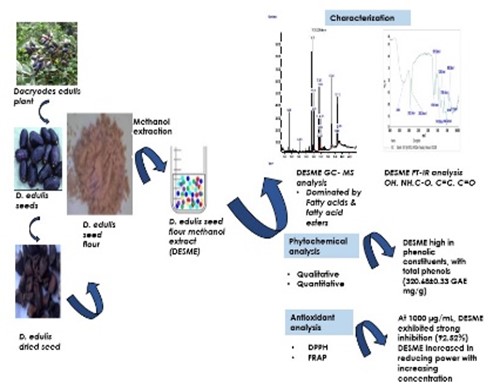
Graphycal Abstract: Dacryodes edulis seed flour methanol extract (DESME) was analysed for bioactive compounds and antioxidant properties. GC-MS analysis identified fifteen compounds, with 9-Octadecenoic acid as the most prominent. Phytochemical analysis revealed a high phenolic content of 320.68±0.33 GAE mg/g and strong antioxidant inhibition (92.52%).
Downloads: 80
Author(s):
Field: Inorganic and coordination chemistry
Type: Review
Issue: 2026 Volume 21, no.1
Pages: 12-33
Namiq Shikhaliyev, Ayten Niyazova, Abel Maharramov, Agaisa Askerov, Nazrin Zeynalli, Viktor Khrustalev, Peri Huseynova
Field: Inorganic and coordination chemistry
Type: Review
Issue: 2026 Volume 21, no.1
Pages: 12-33
Full Text (PDF): Download
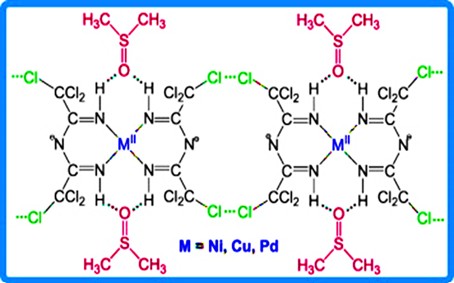
Graphycal Abstract: This review highlights the crucial role of halogen bonding in governing the synthesis, crystal engineering, and supramolecular self-assembly of 1,3,5-triazapentadiene (TAP) metal complexes. It covers synthetic strategies, the σ-hole model, cooperative non-covalent interactions, and diverse functional applications including catalysis and material design.
Downloads: 950
Author(s):
Field: Ecological chemistry
Type: Research paper
Issue: 2026 Volume 21, no.1
Pages: 44-50
Oleg Petuhov, Tatiana Mitina, Nadejda Bondarenco, Diana Grigoras, Tudor Lupascu
Field: Ecological chemistry
Type: Research paper
Issue: 2026 Volume 21, no.1
Pages: 44-50
Full Text (PDF): Download
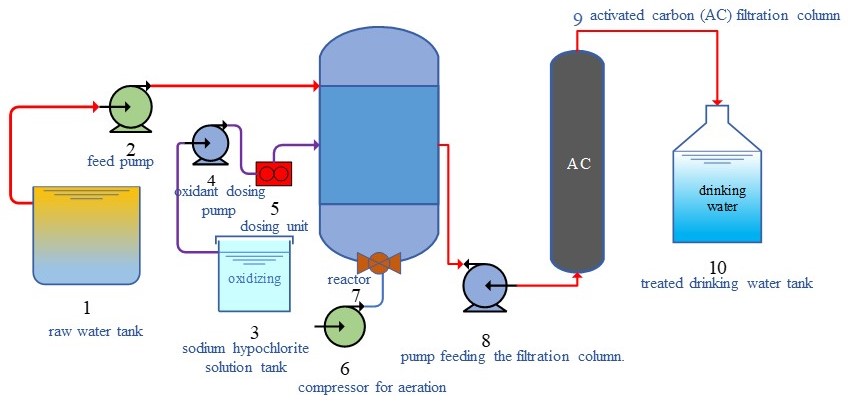
Graphycal Abstract: This paper summarizes data on the chemical composition of groundwater from artesian wells and phreatic wells across various regions of the Republic of Moldova. A comparative analysis of water samples was conducted to identify the parameters that most frequently exceed maximum permissible concentrations for both types of sources. Furthermore, the paper presents research findings on groundwater treatment technologies specifically targeting the removal of ammonia and ammonium ions.
Downloads: 26
Author(s):
Field: Inorganic and coordination chemistry
Type: Research paper
Issue: 2026 Volume 21, no.1
Pages: 86-93
Aliona Vitiu, Eduard Coropceanu, Paulina Bourosh
Field: Inorganic and coordination chemistry
Type: Research paper
Issue: 2026 Volume 21, no.1
Pages: 86-93
Full Text (PDF): Download
https://doi.org/10.19261/cjm.2026.1469
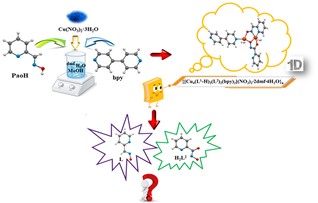
Graphycal Abstract: Copper(II), syn-2-pyridinealdoxime (PaoH), and 4,4′-bipyridine (bpy) react to form a one-dimensional (1D) cationic coordination polymer. The structure consists of tetranuclear units interconnected by in situ generated PaoH ligands and further extended by bpy linkers. Nitrate anions, DMF, and water molecules are involved in hydrogen-bonding interactions with the metal complex. These intermolecular interactions were analyzed and quantified using Hirshfeld surface analysis.
Downloads: 31
Author(s):
Field: Natural product chemistry and synthesis
Type: Research paper
Issue: 2026 Volume 21, no.1
Pages: 103-111
Atabek Bayniyazov, Utkir Kurbanov, Gulbaxar Tilovova, Bakhtiyar Abdurakhmanov, Ravshanjon Khalilov, Munira Allaeva, Jaloliddin Abdurakhmanov, Dilmurodjon Turdaliyev, Shakhnoz Azimova
Field: Natural product chemistry and synthesis
Type: Research paper
Issue: 2026 Volume 21, no.1
Pages: 103-111
Full Text (PDF): Download
https://doi.org/10.19261/cjm.2026.1463
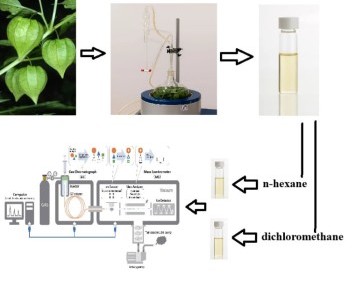
Graphycal Abstract: The chemical composition of essential oils from Physalis angulata L. fruits from Parkent district was investigated by GC–MS. The n-hexane extract contained 59 compounds (96.3%), predominantly fatty acids, with n-hexadecanoic acid (21.13%) and conjugated linoleic acid (9.46%) as major constituents. The dichloromethane extract contained 34 compounds (80.15%), mainly oxygenated volatiles, including 1-hexanol (24.03%), furfural (6.04%), and 3-hexen-1-ol (5.10%). Solvent polarity influenced extraction selectivity, with n-hexane enriching fatty acids and dichloromethane favouring oxygenated compounds. The dichloromethane extract showed the strongest antimicrobial activity against Bacillus subtilis (19 ± 0.12 mm), while the n-hexane extract was less active. These findings demonstrate that solvent-dependent extraction shapes the chemical composition and antimicrobial potential of P. angulata fruit essential oils.
Downloads: 38
Author(s):
Field: Inorganic and coordination chemistry
Type: Research paper
Issue: 2026 Volume 21, no.1
Pages: 72-85
Savita Kumari, Praveen Kumar Gupta, Ram Karan, Amit Kumar, Ramesh Kumar
Field: Inorganic and coordination chemistry
Type: Research paper
Issue: 2026 Volume 21, no.1
Pages: 72-85
Full Text (PDF): Download
https://doi.org/10.19261/cjm.2026.1380
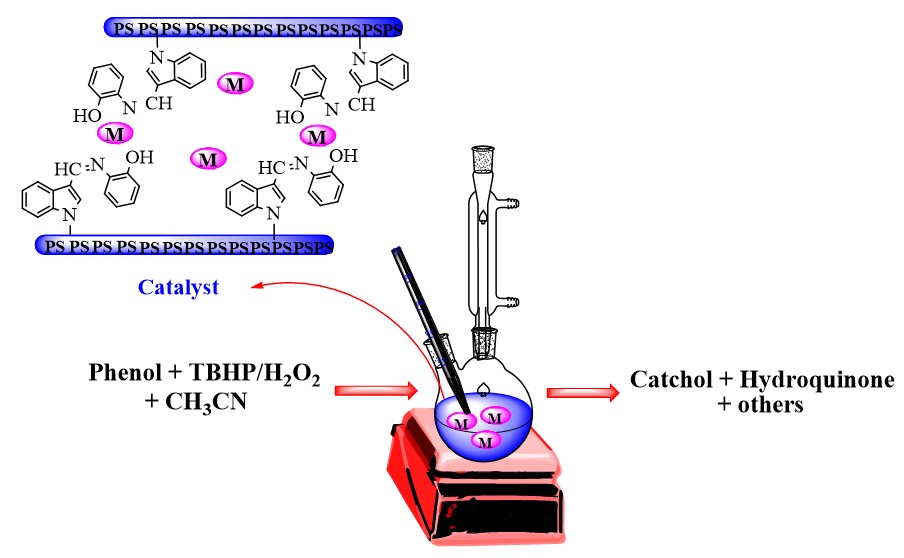
Graphycal Abstract: Indole based supported metal catalysts were synthesized and applied for selective phenol oxidation using TBHP and H2O2. PS-HIMAP-Cu achieved 97.2% conversion with 91.5% catechol selectivity, while PS-HIMAP-Ni offered 96.8% selectivity with H2O2. The catalysts demonstrated stability and reusability, providing an efficient platform for phenol valorisation and wastewater treatment.
Downloads: 24
Author(s):
Field: Organic chemistry
Type: Research paper
Issue: 2026 Volume 21, no.1
Pages: 112-124
Ramil Rzayev, Natalia Sucman, Eduard Monaico, Ion Geru, Alina Nicolescu, Calin Deleanu, Valentin Batır, Bakhtiyar Mammadov, Rena Akhmedova, Fliur Macaev
Field: Organic chemistry
Type: Research paper
Issue: 2026 Volume 21, no.1
Pages: 112-124
Full Text (PDF): Download
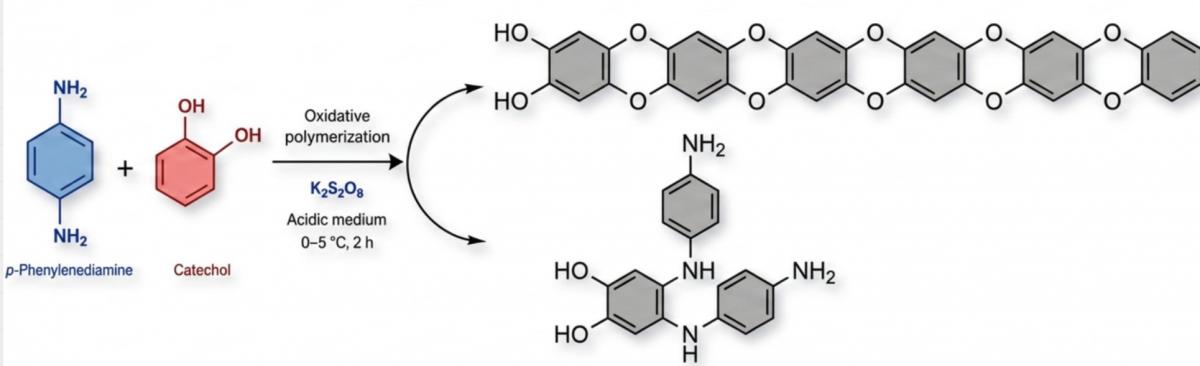
Graphycal Abstract: A conductive nano-oligomer was synthesized via oxidative polymerization of p-phenylenediamine and catechol in acidic and alcohol medium using potassium persulfate as oxidizing agent. The material exhibits enhanced thermal stability, electrical conductivity, and nanoscale morphology, making it promising for applications in sensors, energy storage, and advanced functional materials.
Downloads: 34
Author(s):
Field: Analytical chemistry
Type: Research paper
Issue: 2026 Volume 21, no.1
Pages: 34-43
Abdelghani Mahmoudi, Silvia De Francia, Yamina Boudinara, Hela Mahmoudi, Peixi Zhu
Field: Analytical chemistry
Type: Research paper
Issue: 2026 Volume 21, no.1
Pages: 34-43
Full Text (PDF): Download
https://doi.org/10.19261/cjm.2026.1473
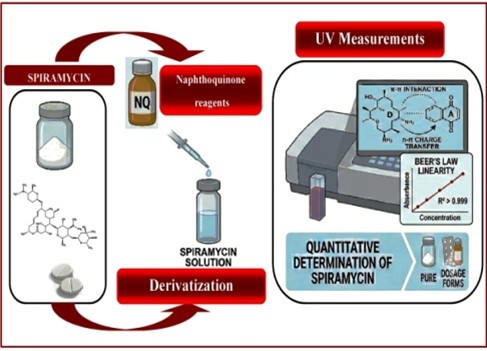
Graphycal Abstract: New spectrophotometric techniques using charge-transfer reactions between naphthoquinone reagents and spiramycin were developed and validated according to ICH guidelines. These procedures were successfully applied to the analysis of spiramycin in pharmaceutical formulations. The suggested approaches are simple, effective, and trustworthy enough, and highlighting their utility in routine quality control.
Downloads: 26
Author(s):
Field: Supramolecular chemistry
Type: Research paper
Issue: 2026 Volume 21, no.1
Pages: 125-135
Evgeny Dukhnovsky, Namiq Shikhaliyev, Alexander Sapronov, Alexey Kubasov, Alexander Novikov, Alexander Tskhovrebov, Gulnaz Mirzayeva
Field: Supramolecular chemistry
Type: Research paper
Issue: 2026 Volume 21, no.1
Pages: 125-135
Full Text (PDF): Download
https://doi.org/10.19261/cjm.2026.1478
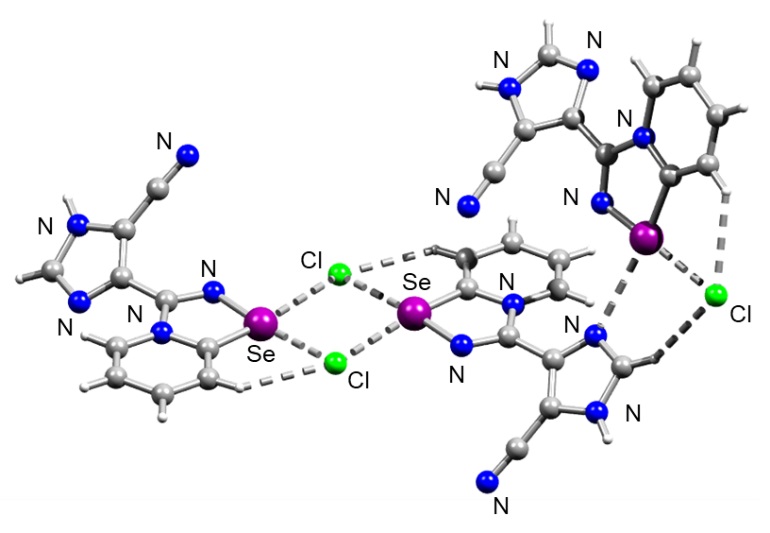
Graphycal Abstract: Novel imidazole-functionalized pyridinium-fused selenadiazolium salts were synthesized. X-ray structures display T-shaped selenium centers with Se···Cl/O chalcogen bonding interactions. The monocationic salt assembles into a 1D supramolecular polymer via [Se···Cl] dimerization and Se···N interactions.
Downloads: 28
Author(s):
Field: Industrial chemistry
Type: Research paper
Issue: 2026 Volume 21, no.1
Pages: 63-71
Priya Garg, Sudhish Kumar Shukla, Pradeep Kumar Varshney
Field: Industrial chemistry
Type: Research paper
Issue: 2026 Volume 21, no.1
Pages: 63-71
Full Text (PDF): Download
https://doi.org/10.19261/cjm.2026.1468
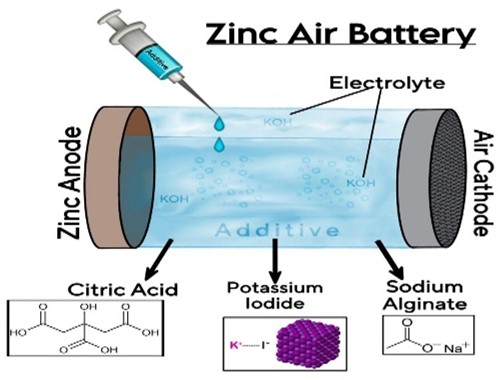
Graphycal Abstract: Anti-corrosive additives reduce zinc corrosion in alkaline electrolytes, enhancing battery lifespan. Additives optimise electrode kinetics, increasing battery efficiency and overall performance. Citric acid with zinc acetate shows promising anti-corrosive properties. Optimization of additive formulations, scalability, and commercialisation are essential for widespread adoption.
Downloads: 35